Boiler Repair or Replacement – Which Makes More Financial Sense?
Not sure whether to repair or replace your boiler? Discover which option offers the best long-term value for your home and budget.

Why you can trust our content
We believe in providing honest, reliable advice backed by recognised industry standards. That’s why every boiler installation, service and repair is supported by:

At a glance
When a boiler starts to cause problems, the same question comes up almost immediately: should it be repaired or replaced?
There is rarely a simple answer. A boiler that is still functioning might only need a minor repair, while another that is still technically working may already be costing more to run than it should.
The decision usually comes down to a combination of age, condition, efficiency and long-term cost rather than a single fault.
Not Every Fault Means a New Boiler
A breakdown does not automatically mean replacement is required.
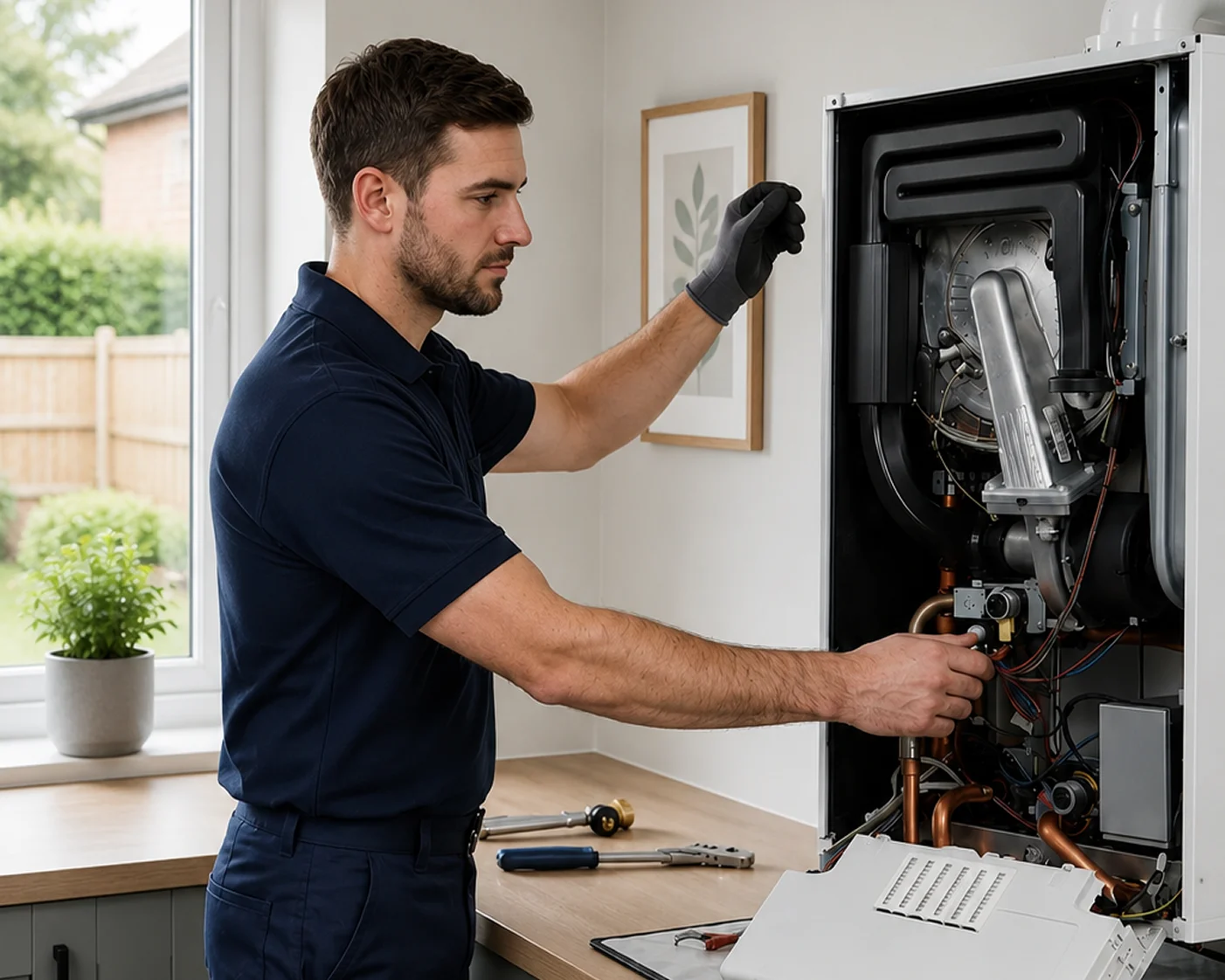
Many common boiler issues are repairable, especially when the system has been well-maintained. Components such as pumps, valves, fans and sensors can often be replaced without needing to change the entire unit.
In these cases, a repair is often the most practical and cost-effective solution, restoring the system to full working order without major disruption.
However, it is important to consider whether the fault is isolated or part of a wider pattern of ongoing issues.
Age Plays a Major Role in the Decision
Boiler age is one of the most important factors when deciding between repair and replacement.
As boilers get older, parts become harder to source, efficiency decreases, and breakdowns become more frequent. Even if a repair is possible, it may only provide a short-term solution.
At a certain point, investing in repeated repairs can become less economical than upgrading to a new system that offers improved reliability and lower running costs.
Age alone is not a deciding factor, but it is always part of the bigger picture.
Repair Costs vs Long-Term Efficiency
A cheaper repair is not always the better financial decision.
Older or less efficient boilers can continue to operate after repairs, but they may still consume more energy than necessary. This means higher ongoing running costs even after the immediate fault has been fixed.
A new boiler, while requiring a higher upfront investment, often delivers improved efficiency that reduces monthly energy usage.
The key consideration is not just the cost of fixing the problem, but the cost of continuing to run the system over time.
Let’s get started, which fuel powers your boiler?
Mains Gas
LPG
It just takes 60 Sec
And then you can book a free consultation
When Repairs Start to Add Up
One-off repairs are rarely a concern. Repeated repairs, however, can indicate a system that is reaching the end of its reliable lifespan.
If multiple components have failed over a short period, or if new issues keep appearing, it may be a sign that the boiler is under increasing strain.
At this stage, replacement can sometimes offer greater long-term stability and reduce the likelihood of ongoing disruption.
Reliability and Peace of Mind Matter Too
Beyond cost, reliability is often a deciding factor.
A boiler that works intermittently or requires frequent call-outs can become a source of frustration, particularly during colder months when heating is essential.
Replacing an unreliable system removes uncertainty and provides a more consistent level of performance.
For many households, this peace of mind is just as important as financial considerations.
Making the Right Decision for Your System
There is no universal rule for whether a boiler should be repaired or replaced. Each system needs to be assessed individually based on its condition, age and performance history.
In many cases, a professional inspection can provide clarity by identifying whether a fault is isolated or part of a wider decline in efficiency and reliability.
BlueFlame Boilers offers expert boiler repair and installation services across Surrey, helping homeowners make informed decisions about their heating systems.
Related articles


Let’s get started, which fuel powers your boiler?
Mains Gas
LPG

Leading Gas Safe engineers covering Surrey for all your boiler and heating requirements.
quick links
services
contact

Leading Gas Safe engineers covering Surrey for all your boiler and heating requirements.
Blueflame Boilers Ltd is an Introducer Appointed Representative (Financial Services Register No. 1020304) of Phoenix Financial Consultants Limited (Phoenix). Phoenix is a credit broker, not a lender. Phoenix is authorised and regulated by the Financial Conduct Authority (FRN: 539195), and offers finance from its panel of lenders. All finance subject to status and credit checks.
© 2026 BlueFlame Boilers Ltd. All rights reserved | Powered By WeBuildTrades