Why Are My Energy Bills So High Even Though My Heating Is Working Normally?
High energy bills don’t always mean your boiler is faulty, discover the hidden causes and practical ways to reduce your heating costs.

Why you can trust our content
We believe in providing honest, reliable advice backed by recognised industry standards. That’s why every boiler installation, service and repair is supported by:


At a glance
There is a common assumption that if a boiler is producing heating and hot water, it must be working efficiently. Unfortunately, that is not always the case.
A heating system can appear to be operating perfectly while quietly using more energy than necessary. The radiators get warm, the hot water runs as expected, and there are no obvious faults or warning lights. Yet energy bills continue to climb.
When this happens, the issue is often not a single fault but a combination of factors affecting the overall efficiency of the heating system. Understanding these causes can help homeowners reduce running costs and improve comfort without necessarily replacing their boiler.
Your Boiler May Be Working Harder Than It Needs To
A boiler’s job is simple: heat water and circulate it around your home. However, as boilers age, internal components naturally experience wear and tear.
Even if a boiler continues to function reliably, it may not be operating at its original efficiency levels. Components such as heat exchangers, pumps and burners can become less effective over time, meaning the appliance uses more fuel to achieve the same result.
This is particularly common with older boilers that have not been serviced regularly. Small efficiency losses can accumulate gradually, making them difficult to notice from day to day but significant over the course of a year.
The boiler still works. It just works less efficiently than it once did.
Sludge in Your Heating System Could Be Costing You Money
One of the most overlooked causes of high energy bills is sludge within the central heating system. Over time, corrosion inside radiators and pipework creates a build-up of magnetite, a black iron oxide residue that circulates around the system. This sludge can settle in radiators, reducing heat output and restricting water flow.
The result is that rooms take longer to warm up, and the boiler has to run for longer periods to achieve the desired temperature.
Some common signs of sludge include:
- Cold spots on radiators
- Radiators that are warm at the top but cold at the bottom
- Slow heat-up times
- Frequent need to bleed radiators
- Noisy pipework
Because these symptoms often develop gradually, many homeowners simply accept them as normal.
A professional assessment can determine whether power flushing or system cleaning may improve performance and reduce energy consumption. At Blueflame Boilers, we carry out power flushing across Surrey. We can help advise you whether the process is suitable for your system.
Your Thermostat May Be Working Against You
Heating controls have advanced considerably in recent years, yet many properties still rely on older thermostats that provide only basic temperature management.
An inaccurate thermostat can allow rooms to become warmer than necessary before shutting the heating off. Even a small difference in temperature settings can have a noticeable effect on energy usage over time.
Modern programmable controls and smart thermostats offer far greater precision. They can adjust heating schedules around daily routines, reduce unnecessary heating periods and provide better control over energy consumption.
The savings may seem modest on a daily basis, but over an entire heating season, they can become significant.
Let’s get started, which fuel powers your boiler?
Mains Gas
LPG
It just takes 60 Sec
And then you can book a free consultation
Not Every Room Needs the Same Amount of Heat
Heating systems often operate as though every room in a property has identical requirements.
In reality, usage varies considerably.
A spare bedroom may need very little heating. A home office could require consistent warmth throughout the day. Living rooms, kitchens and hallways all have different heating demands.
Without properly balanced radiators and correctly adjusted thermostatic radiator valves (TRVs), energy can easily be wasted heating spaces that are rarely used.
Improving the balance of a heating system allows heat to be distributed more effectively throughout the property, helping rooms reach their target temperatures more efficiently.
Sometimes the solution is not generating more heat.
It is using the heat already being produced more effectively.
Small Maintenance Issues Can Have a Big Impact
Not every efficiency problem triggers a boiler fault code.
A slightly low system pressure, a partially blocked filter or a component beginning to wear may not cause a breakdown, but they can affect performance.
These issues often go unnoticed because the heating and hot water continue to function.
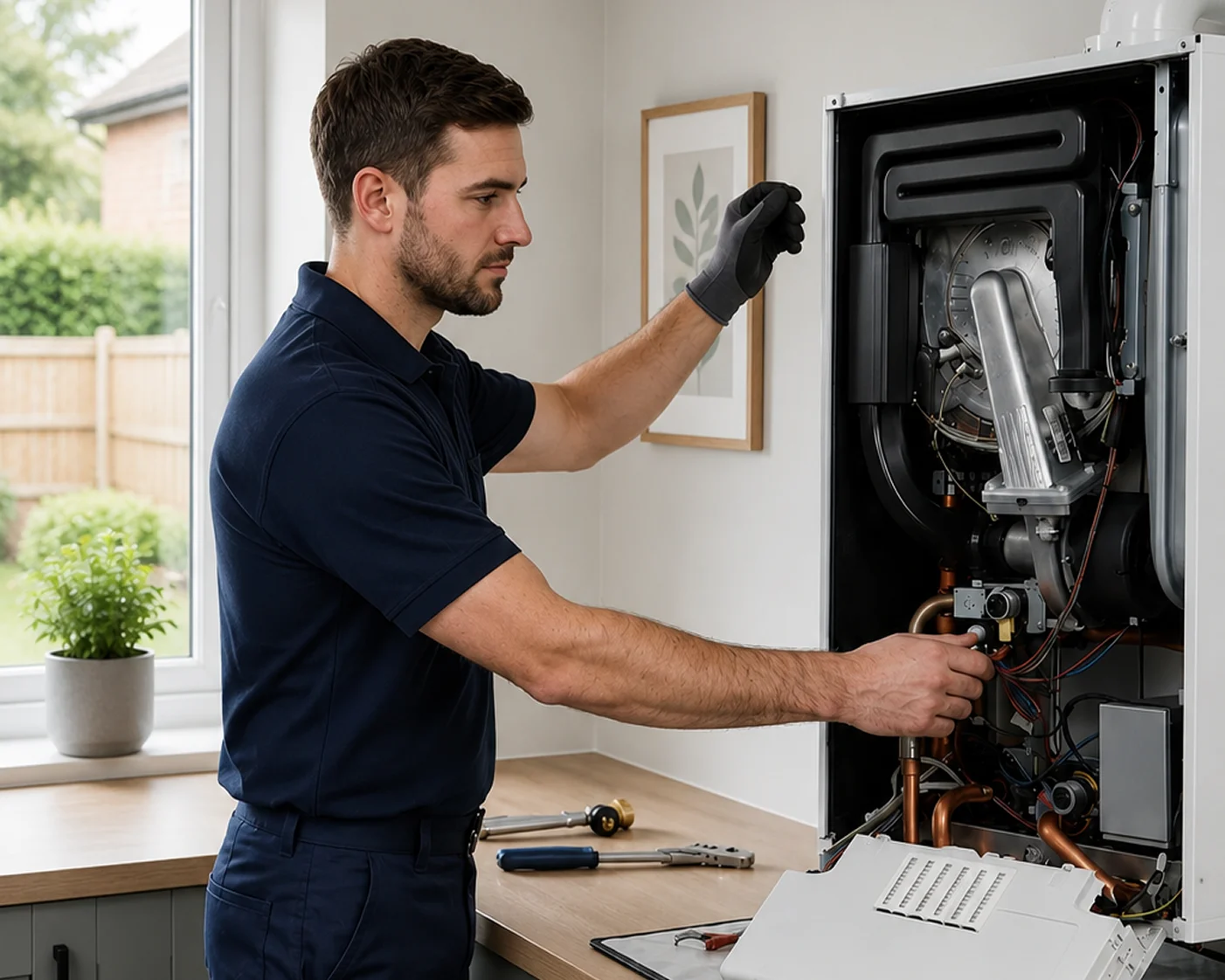
This is one reason annual boiler servicing remains so important. Servicing is not simply about safety checks. It also allows engineers to identify developing issues before they begin affecting efficiency or reliability.
Addressing a minor issue early is usually far more cost-effective than waiting for it to develop into a larger repair.
During a professional boiler service, engineers can assess the overall condition of the appliance and identify issues that may be affecting performance. Regular boiler servicing in Surrey helps ensure heating systems operate safely, reliably and as efficiently as possible throughout the year.
Could Your Boiler Simply Be Too Old?
Boilers typically last many years when properly maintained, but efficiency standards have improved significantly over time.
An older appliance may still provide dependable heating while consuming considerably more fuel than a modern equivalent.
That does not automatically mean replacement is necessary. Many older boilers continue to offer excellent value when maintained correctly.
However, if rising energy bills are combined with increasing repair costs, reduced reliability or a boiler approaching the end of its expected lifespan, it may be worth considering whether a replacement could deliver worthwhile savings in the long term.
The key is assessing the overall picture rather than focusing solely on whether the boiler still works.
The Importance of Looking at the Whole Heating System
When energy bills rise, the boiler often receives all the attention.
In reality, the efficiency of a heating system depends on much more than the boiler itself.
Pipework, radiators, controls, water quality and system maintenance all influence how effectively heat is produced and distributed around the property.
Focusing on the entire system often reveals opportunities for improvement that are less expensive than replacing major equipment.
Concerned About Rising Heating Bills?
High energy bills do not always mean you need a new boiler. In many cases, improving efficiency through servicing, system cleaning, better controls, or targeted repairs can make a noticeable difference to both performance and running costs.
Understanding what is causing increased energy consumption is the first step towards reducing it.
If your heating bills seem higher than expected, Blueflame Boilers can assess your heating system, identify potential causes of inefficiency and recommend practical solutions. From boiler servicing and repairs to power flushing and heating system improvements, our experienced team provides professional heating services throughout Surrey.
Contact Blueflame Boilers today to arrange an inspection and find out whether your heating system could be running more efficiently.
Related articles

Let’s get started, which fuel powers your boiler?
Mains Gas
LPG

Leading Gas Safe engineers covering Surrey for all your boiler and heating requirements.
quick links
services
contact

Leading Gas Safe engineers covering Surrey for all your boiler and heating requirements.
Blueflame Boilers Ltd is an Introducer Appointed Representative (Financial Services Register No. 1020304) of Phoenix Financial Consultants Limited (Phoenix). Phoenix is a credit broker, not a lender. Phoenix is authorised and regulated by the Financial Conduct Authority (FRN: 539195), and offers finance from its panel of lenders. All finance subject to status and credit checks.
© 2026 BlueFlame Boilers Ltd. All rights reserved | Powered By WeBuildTrades